
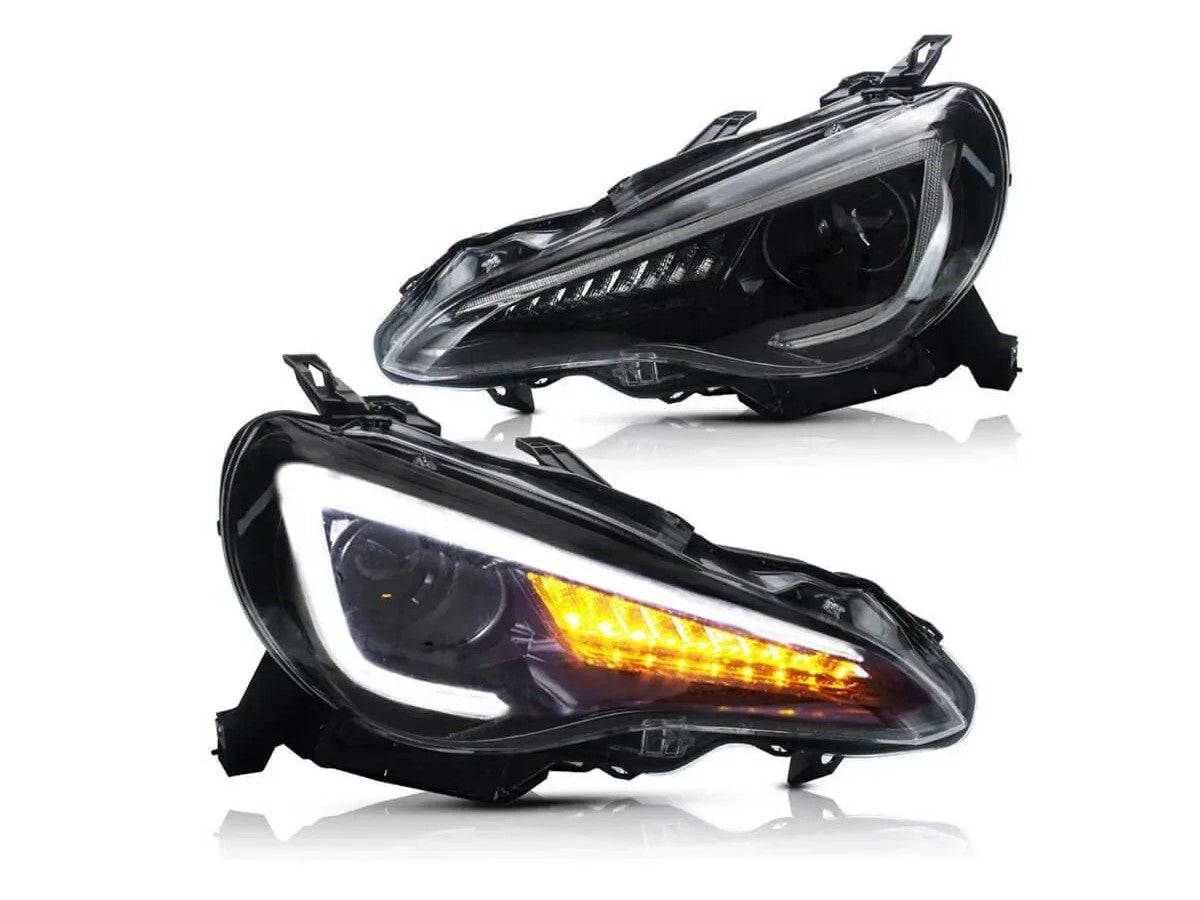
LED headlights are one of the first upgrades people look at, and for good reason. They're brighter, whiter, and they make older halogen setups look ancient overnight. But the legality is murkier than most people realise, and getting it wrong can mean a defect notice, a fine, and a car that fails its next inspection.
Here's the honest version: yes, LED headlights can be perfectly legal in Australia. It just depends entirely on how you do it. Slotting LED globes into a housing built for halogens is a very different thing to fitting a complete LED headlight assembly, and the law treats them differently too.
Let's break it down properly.
The short answer
There are three scenarios, and only two of them are road-legal:
- Factory-fitted LED headlights are legal. They were certified with the car.
- A complete, ADR-compliant LED headlight assembly designed for your vehicle is legal, as long as it actually complies.
- LED "conversion" globes dropped into a halogen housing are almost always not legal for road use.
If you remember one thing, make it that last point, because it's where most people come unstuck.
Why factory LED headlights are always fine
When a car rolls out of the factory with LED headlights, that lighting system was tested and approved as part of the vehicle meeting the Australian Design Rules (ADRs). Beam pattern, intensity, colour and aim were all signed off before the car was ever sold here. Nothing to worry about, nothing to prove. The grey area only starts the moment you change something.
The trap: LED "conversion" globes
This is the cheap, popular option, and it's the one that gets people defected.
The first problem is regulatory. There is currently no Australian Design Rule written specifically to approve aftermarket LED replacement globes. That means manufacturers literally cannot get them ADR-certified, because there's no standard to certify them against. It's why almost every LED globe kit on a parts shelf carries some version of "NOT ADR APPROVED, FOR OFF-ROAD USE ONLY" on the box. That label isn't marketing caution, it's the legal reality.
The second problem is physics. A halogen reflector or projector is engineered around the exact position and shape of a halogen filament. Drop an LED emitter into that same housing and the light no longer originates from where the optics expect it. The beam scatters, the sharp cut-off goes soft, and you end up throwing glare straight into oncoming traffic while often lighting the road worse than the halogen you removed. That's exactly the kind of dazzling that gets you pulled over.
Some states are explicit about this. In NSW, for example, a retrofitted LED globe is only permitted if it's a genuine direct replacement that keeps the lamp compliant, and the packaging must clearly state it's suitable for road use and meets the relevant requirements. Most globe kits can't make that claim, which is the whole point.
Complete LED headlight assemblies (VLAND, AlphaRex and the like)
This is the legitimate path to a proper LED setup, and it's where brands like VLAND and AlphaRex come in. Instead of changing the light source inside an old housing, you replace the entire headlight with a unit built as an LED headlight from the ground up, with optics designed for the LED source.
But fitting one doesn't automatically make you legal, and this catches people out. A lot of aftermarket assemblies are sold with DOT (US) or E-Mark (European) certification. Those are real overseas standards, but they are not the same as ADR approval. An E-marked headlight is not, by default, an ADR-approved headlight in Australia.
To be legal on the road here, a complete assembly needs to comply with the relevant ADRs, principally ADR 13 (which covers how lighting is installed and positioned) and the headlamp performance rules under ADR 46 and related standards. Those cover beam pattern, light output, colour and aim. Since 2021 Australia has been progressively aligning its lighting ADRs with the global UNECE regulations, a shift largely complete by 2026, so newer UNECE-approved systems are increasingly recognised here.
The practical takeaway: choose a complete assembly, check what the manufacturer actually states about road use and compliance, and if you're not certain about your specific car, get it confirmed before you drive on it.
The rules every headlight has to meet
Whatever you fit, the lights themselves have to tick these boxes:
- Colour. Headlights must emit white or yellowish-white light only. Blue, purple and red are illegal on a normal road car and are a fast way to get attention you don't want.
- Beam pattern and aim. You need a clean cut-off and correct aim so you light the road without dazzling other drivers. Lights must be fitted symmetrically, at the same height, and throw the same colour and intensity on both sides.
- Intensity. Brightness is regulated. "As bright as possible" is not the goal; lights that are excessively bright or badly aimed are exactly what enforcement targets.
- Installation. Mounting has to be secure with no dangerous protrusions, the lights can't obstruct your view, and any DRLs have to dim or switch off appropriately when high beam comes on.
It's national rules, but state enforcement
The ADRs are national standards, but each state and territory enforces vehicle compliance through its own transport authority, and the detail varies. NSW applies its Vehicle Standards Information guidelines to aftermarket lighting. South Australia takes the firm line that a non-compliant LED lamp makes the entire light assembly non-compliant. Queensland allows up to four additional forward-facing lamps if fitted correctly. Before you commit to a setup, it's worth a five-minute check of your own state's transport authority, because what's waved through in one state can be flagged in another.
What happens if you get caught
Running non-compliant headlights isn't a slap on the wrist you can ignore:
- Defect notice. Your car can be issued a defect (the yellow or "canary" sticker) requiring you to rectify the lighting before it's road-legal again.
- Fines and demerits. Penalties vary by state, but dazzling or non-prescribed lights attract fines and, in some cases, demerit points.
- Failed inspection. Non-compliant lighting can fail a roadworthy or rego inspection outright.
- Insurance risk. If a non-compliant modification is found to have contributed to an incident, it can complicate a claim.
Enforcement is also getting smarter, with automated camera systems increasingly able to detect dazzling headlights. You're most likely to get flagged if your lights are obviously brighter than factory or poorly aimed.
How to upgrade your headlights the legal way
If you want a genuine improvement without the defect risk, you've got clear options:
- Premium halogen globes. Quality globes from the likes of Philips or Osram give whiter, brighter output than budget halogens while staying fully legal. The cheapest legal win.
- A complete LED assembly built for your car. Replace the whole headlight with a purpose-built LED unit rather than converting an old housing. Check the manufacturer's road-use and compliance statements, and match it to your exact model.
- Professional installation and alignment. Get the unit fitted and the beam aimed by a qualified auto electrician. Correct aim is half the battle for both legality and actually seeing better at night.
- Keep the colour right. White or yellow. Always.
FAQ
Can I just put LED globes in my halogen headlights?
For road use, generally no. There's no ADR to certify aftermarket LED globes against, and most are sold as off-road use only. They also tend to wreck the beam pattern in a halogen housing.
Are VLAND or AlphaRex headlights legal in Australia?
It depends on ADR compliance for your specific fitment, not the brand name. A complete assembly is the right approach, but DOT or E-Mark certification alone doesn't equal ADR approval. Check the compliance details for your vehicle before fitting.
What colour headlights are legal?
White or yellowish-white only. Blue, purple and red are not permitted on standard road vehicles.
Will LED headlights fail a roadworthy or rego inspection?
Non-compliant lighting can be failed or defected. Compliant, correctly aimed lighting won't be.
Are the rules the same in every state?
The ADRs are national, but each state's transport authority enforces them and the finer details differ. Always check your own state's requirements.
The bottom line
LED headlights aren't banned in Australia, but the easy globe-swap route usually is. The legal path is a complete, compliant assembly fitted and aimed properly, or quality halogen globes if you want the simplest legal upgrade.
If you're after a complete LED setup done right, browse our VLAND and AlphaRex ranges, add a set of DRL modules to finish the look, or sort the rear with our tail lights. Not sure what suits your car? Get in touch with the team and we'll point you at the right fitment.
This article is general information, not legal advice. Lighting rules change and are enforced differently between states and territories. Confirm the requirements for your specific vehicle with your state or territory transport authority or a licensed vehicle certifier before modifying your headlights.


