
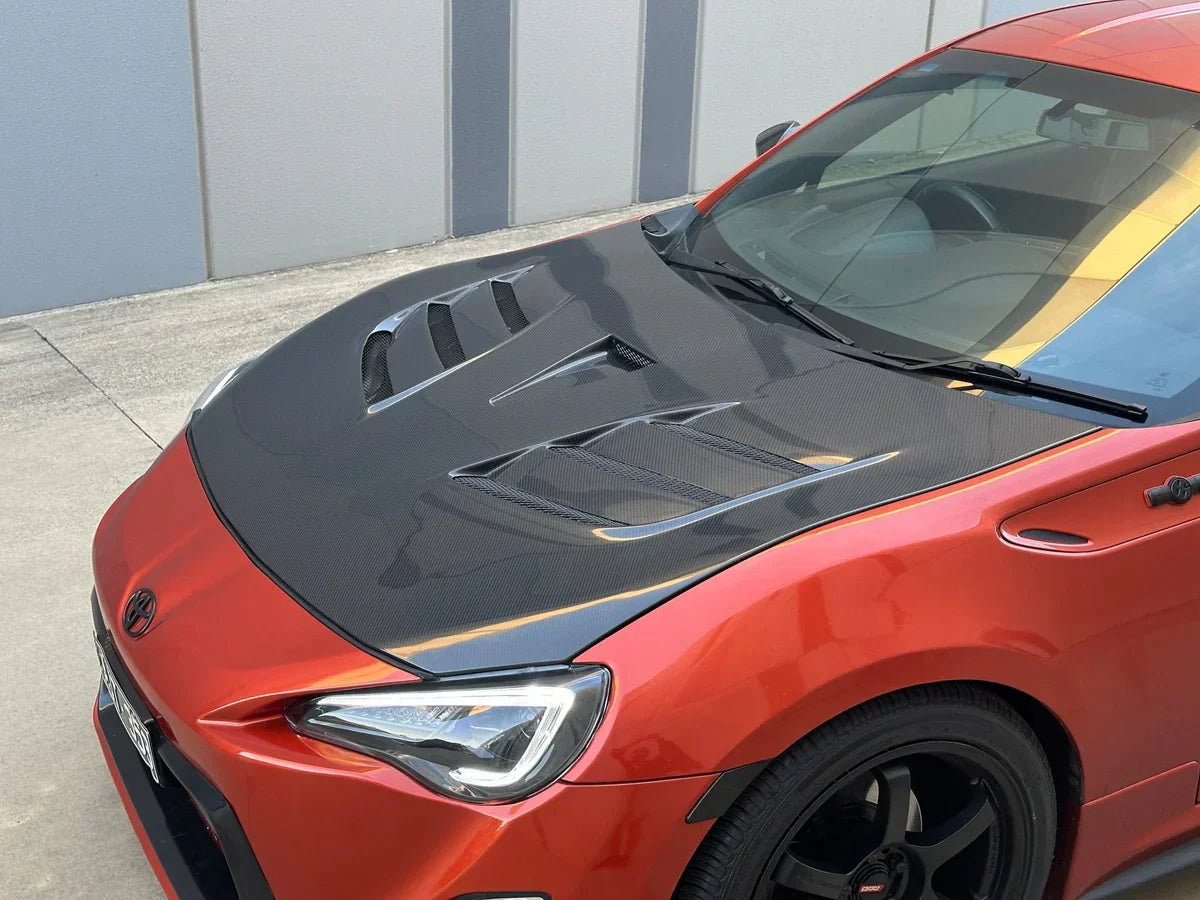
Most carbon fibre parts you see online look the same. Black weave, glossy finish, same general shape. The price tags can vary by a factor of three or four for what looks like the same product, and that gap confuses a lot of buyers.
The reason is simple. Carbon fibre is not one material. It is a family of manufacturing processes that produce parts with very different characteristics. The two main categories are wet carbon and dry carbon, and the difference between them is the single biggest factor in price, weight, strength, and finish quality.
Here is what each one actually is, what each gives you, and how to tell which is sitting in front of you.
What wet carbon is
Wet carbon, sometimes called hand-laid carbon or open-mould carbon, is made by laying sheets of dry carbon fibre cloth into a mould by hand. A worker brushes liquid resin onto each layer as it goes in. Once the layers are stacked, the part is allowed to cure at room temperature, sometimes with a vacuum bag to help compress the layers.
That is the entire process. No autoclave. No precise temperature control. No pre-measured resin ratios. The amount of resin in each part depends on how much the worker brushed on that day.
The result is a part that looks like carbon fibre, has the visible weave pattern people associate with the material, and weighs roughly what the original steel or plastic part it replaced weighed. Sometimes more.
This is the kind of "carbon fibre" sold on cheap eBay listings and AliExpress. It is not necessarily a scam. It is technically carbon fibre. It is just not the lightweight, high-strength material people think they are buying.
What dry carbon is
Dry carbon starts with what is called pre-impregnated cloth, or pre-preg. The carbon fibre cloth comes from the factory already infused with a precise amount of resin, kept cold so the resin does not cure prematurely.
The pre-preg is laid into a hard mould, sealed in a vacuum bag, and placed inside an autoclave. An autoclave is essentially a high-pressure oven that can reach temperatures around 120 degrees Celsius and pressures of several atmospheres. The combination of heat and pressure cures the resin and compresses the layers to remove air bubbles, producing a part with the optimal ratio of carbon to resin.
The result is a part that is genuinely lightweight. A dry carbon bonnet for a high-performance sedan typically weighs around 6 to 8 kilograms, compared to roughly 14 to 16 kilograms for the factory aluminium equivalent. A wet carbon replacement for the same bonnet often comes out at 12 to 18 kilograms, sometimes heavier than the factory part it replaced.
Weight and strength: the real difference
This is where the conversation should be had honestly. The marketing image of carbon fibre is built around weight savings and stiffness. Both of those benefits only apply when the part is made correctly.
A properly cured dry carbon part has a fibre-to-resin ratio of around 60 to 40, meaning most of the part is the carbon fibre that gives it strength, with just enough resin to bond the layers. A wet carbon part typically runs 30 to 40 percent fibre, with the rest being cured resin. The resin adds weight without adding meaningful strength.
In terms of structural strength, dry carbon is dramatically stiffer for its weight. This matters for parts that have to handle load, like bonnets, splitters, diffusers, and aero components that see airflow at speed. A wet carbon splitter at 150 kilometres per hour can flex visibly. A dry carbon equivalent will hold its shape.
For purely cosmetic parts, like a mirror cover or an interior trim panel, the structural difference matters less. The weight difference still applies, but the load on the part is negligible.
How to spot the difference
You can usually tell wet carbon from dry carbon by looking at it, even before you pick it up.
The weave pattern on a quality dry carbon part is perfectly uniform. Every fibre line is straight. The corners and curves of the part show no distortion in the weave. The surface finish is glassy and even, without ripples, waves, or orange peel texture.
Wet carbon parts often have visible imperfections in the weave. Lines that drift, areas where the cloth was stretched or bunched during lay-up, dull patches where the resin cured unevenly. Look at the underside or the inside surface, which is rarely as polished as the show face. On a wet carbon part the back side often looks rough, with visible cloth texture and unfinished resin pooling. On a dry carbon part the back is usually as cleanly finished as the front.
The other tell is weight. If a part feels close to the weight of the original, or if it feels heavy for its size, it is almost certainly wet carbon regardless of what the listing says.
Why the price gap is so wide
Dry carbon is expensive to produce. The pre-preg cloth itself costs five to ten times more than dry cloth and liquid resin. The autoclave is a multi-million dollar capital investment that takes electricity to run and skilled operators to use safely. Production volumes are limited by the size of the autoclave and the duration of each cure cycle, which can run several hours per batch.
The result is that a single dry carbon bonnet for a popular performance car typically lands in the AUD 3,500 to AUD 6,000 range. A wet carbon equivalent for the same car might sell for AUD 800 to AUD 1,500.
The wet carbon part is cheaper because it costs less to make, not because the manufacturer is being generous. The buyer is getting a lower-grade product at a price that reflects it.
When wet carbon is fine
There are situations where wet carbon makes sense. Interior trims, mirror covers, badge surrounds, and other purely cosmetic parts that do not need to be light or strong can be made in wet carbon without any real downside. The look is the same, the cost is much lower, and the small weight penalty is irrelevant on a small cosmetic piece.
If you want a wrapped or carbon-look finish on an existing factory part, wet carbon overlays or full replacements are a reasonable budget choice.
When dry carbon is worth the money
For structural or aerodynamic parts, dry carbon is the right choice. Bonnets, boot lids, splitters, diffusers, GT wings, side skirts, and any part that affects how the car drives or how air flows over it should be dry carbon if you want the part to do its job properly.
The weight saving on a bonnet alone, around 8 to 10 kilograms off the front of the car, has a measurable effect on steering response and front-end grip. A wet carbon bonnet at stock weight gives you the look without any of the dynamic benefit.
The bottom line
If a carbon fibre part is being sold at a price that seems too good to be true, it is wet carbon. There is no manufacturer producing genuine dry carbon parts at a budget price point. The economics do not allow it.
Decide what you actually want from the part. If you want the look at the lowest cost, wet carbon is honest about what it is and reasonable for the money. If you want the weight, strength, and finish quality that carbon fibre is famous for, you need dry carbon, and the price tag reflects what goes into making it.
If you want a recommendation on dry carbon options for your specific car, send us an email or browse our range online.
The Vero Motorsport Team
info@veromotorsport.com


