
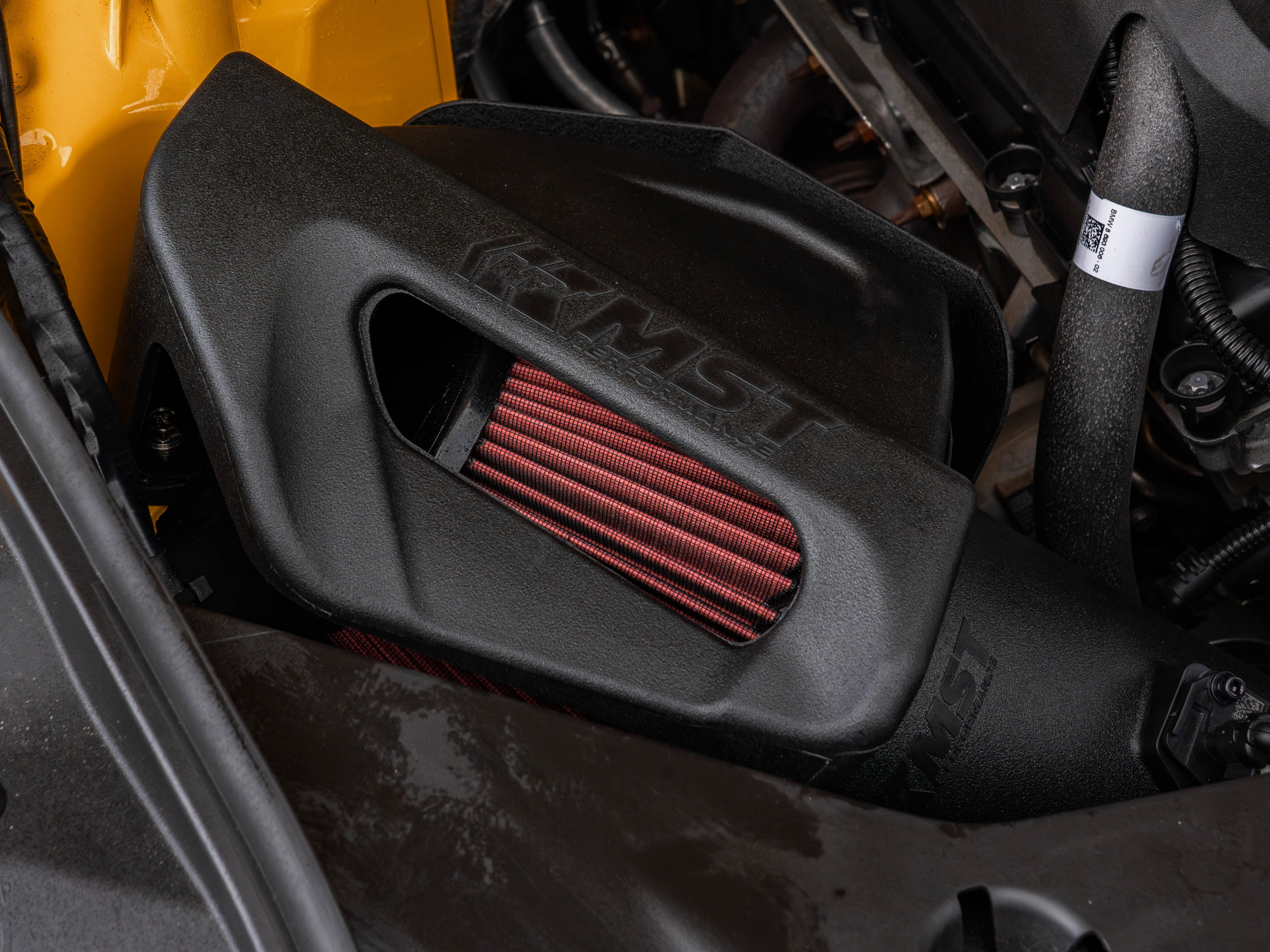
A cold air intake is one of the first mods most enthusiasts consider, and one of the most overhyped. Online listings promise 15 to 25 horsepower gains for a few hundred dollars. Forum threads claim massive power increases. Marketing photos show the part in chrome and carbon fibre with airflow arrows pointing dramatically toward the engine.
The reality is more nuanced. A cold air intake does add power on most modern performance cars, but the gains are smaller than the marketing suggests. What it actually changes is more about feel, sound, and supporting other mods than peak horsepower numbers.
Here is what a cold air intake actually is, what it does, and when it is worth fitting.
What a cold air intake actually is
A cold air intake is a replacement for your car's factory air intake system. That system has three parts: the air filter, the airbox that houses the filter, and the tubing that carries air from the airbox to the throttle body.
The factory system is designed to balance airflow, noise, manufacturing cost, cold weather operation, and emissions compliance. The result is usually a restrictive intake with multiple silencing chambers, narrow tubing, and a small filter. It works fine for daily driving but limits airflow under hard acceleration.
A cold air intake replaces those parts with a less restrictive filter (often a high-flow cotton or foam element), a larger or smoother intake tube, and an airbox or shielded housing that pulls air from a cooler location in the engine bay.
The naming is technically misleading. Most aftermarket "cold air intakes" pull air from the same general area as the factory intake. The "cold" part comes from the routing and the fact that they avoid pulling air directly off hot engine components, not from any actual refrigeration.
Where the cold part actually matters
Cooler air is denser, which means more oxygen molecules per volume, which means more combustion potential. This is a real effect, but it is small in practical terms. The intake air temperature difference between a stock airbox and a quality aftermarket setup is usually 5 to 15 degrees Celsius on a hot day, which translates to roughly 1 to 3 horsepower at the crank.
The bigger effect is reduced restriction. A high-flow filter and a smoother intake tube let the engine breathe more freely under load, which adds a few horsepower of its own. Combined with the small temperature effect, total gains on a stock car typically land in the 5 to 12 horsepower range, depending on platform.
On turbocharged cars, the picture changes. Turbo engines benefit more from intake upgrades because the turbocharger amplifies any improvement in airflow. A cold air intake on a stock BMW M340i or VW Golf R might add 10 to 18 horsepower at the wheels, particularly in the mid-range where the turbo is working hardest. On a tuned car, the gains can be larger because the tune is no longer constrained by the factory intake.
Sound: the bigger noticeable difference
Most people who fit a cold air intake notice the sound change before they notice the power change. The factory airbox is designed to be quiet. An aftermarket intake, particularly one with an open cone filter or a tuned airbox, lets you hear the engine breathing.
On a turbocharged car this becomes very noticeable. You get audible turbo spool, the whoosh of the blow-off or diverter valve, and a deeper induction note under throttle. For many buyers this is the actual reason they fit one. The horsepower gain is the justification on paper, but the sound is what makes the upgrade feel worthwhile every time they drive the car.
On a naturally aspirated engine the sound change is more subtle. The intake becomes throatier under load but does not transform the character of the car the way it does on a turbo motor.
Closed airbox versus open cone
The two main styles of aftermarket intake are a closed airbox (which fully encloses the filter and seals it off from engine bay heat) and an open cone (a single filter element exposed to the engine bay air).
Closed airbox designs like the MST Performance and Armaspeed setups deliver cooler intake temperatures consistently because they isolate the filter from the heat of the engine. They sound slightly muted compared to open cones but make more usable power.
Open cone filters sound more aggressive and feel more dramatic to install, but they sit in hot engine bay air, particularly after the car has been driven hard. Intake temperatures with an open cone can actually be higher than stock under sustained driving, which works against the whole point of a cold air intake.
For street and track use on a turbocharged car, a closed airbox design is the better engineering choice. For pure sound on a show car or weekend cruiser, an open cone is fine.
Do you need a tune?
For most modern cars, a cold air intake will work as a bolt-on with no tune required. The factory ECU adjusts fuel delivery based on mass airflow sensor readings, so a slightly increased airflow gets compensated for automatically.
That said, you will get more out of the intake with a tune. The factory tune is set up for the factory intake, so the ECU's compensation has limits. A proper tune calibrated for the new intake will extract closer to the actual horsepower potential. On most platforms this might be the difference between a 6 horsepower gain and a 14 horsepower gain.
If you are stacking modifications, a tune becomes essential. An intake plus downpipe plus exhaust on a stock tune leaves a lot of power on the table.
Maintenance and engine wear
A quality cold air intake should not increase engine wear if installed correctly and maintained. The myth that aftermarket filters let in more dirt comes from cheap brands with poor filter media. Reputable filters from MST Performance, Armaspeed, K&N, or BMC filter just as effectively as factory paper elements.
The key maintenance difference is that aftermarket filters are usually washable and reusable. Every 15,000 to 20,000 kilometres you clean the filter with a dedicated cleaner, let it dry, re-oil it (if it is an oiled cotton type), and reinstall. This is more involved than throwing out a paper filter, but it lasts the life of the car.
When a cold air intake is worth it
A cold air intake makes sense if you have a turbocharged car and want better sound, modest power gains, and a foundation for future mods. The investment is reasonable (typically AUD 400 to AUD 900 for a quality kit), installation is straightforward, and the result is a more engaging car to drive.
It also makes sense if you are planning a tune. The intake is one of the standard supporting modifications that lets a tune extract more from the engine safely.
It does not make sense if you are buying it purely for peak horsepower on a stock naturally aspirated car. The gains will be small and you will probably be disappointed if that was your only reason for fitting it.
The bottom line
A cold air intake on a turbocharged car adds real but modest power, transforms the induction sound, and supports future mods. On a naturally aspirated car the gains are smaller and the upgrade is mostly about sound.
Buy from a brand that publishes flow data and dyno results, not a brand that just publishes glamour shots. And if you are stacking the intake with other mods, budget for a tune to actually realise the power you have unlocked.
The Vero Motorsport Team
info@veromotorsport.com


